
The butterfly effect in the making
Vineesh U S | Behavioral Scientist | decoding human patterns to build resilient choices

Can one sentence, spoken inside a courtroom, put thousands of strangers on the streets of a national capital ten weeks later?
On 15 May 2026, India’s Chief Justice, Surya Kant, was speaking about the country’s unemployed youth. He called them “cockroaches” and “parasites of society,” a remark that is now documented as the origin point of a nationwide youth movement [The context, How it was interpreted, What happened next, Wikipedia].
Within 24 hours, a political communications strategist named Abhijeet Dipke had registered a new movement carrying the insult as its name: the Cockroach Janta Party, or CJP [The manifesto, How people joined the movement, The viral rise]. Its slogan: “Voice of the Lazy and Unemployed.” By 21 May, the BBC was profiling it as one of India’s strangest new political phenomena [The new star]. By 20 July, it was leading thousands of protesters in a march on Parliament.
That phenomenon, one sentence to a Parliament march, is worth pausing on before we go further. It has a name in science.
The butterfly effect
The phenomenon is rooted in chaos theory, that a small change in a system’s initial conditions can produce disproportionately large downstream effects.
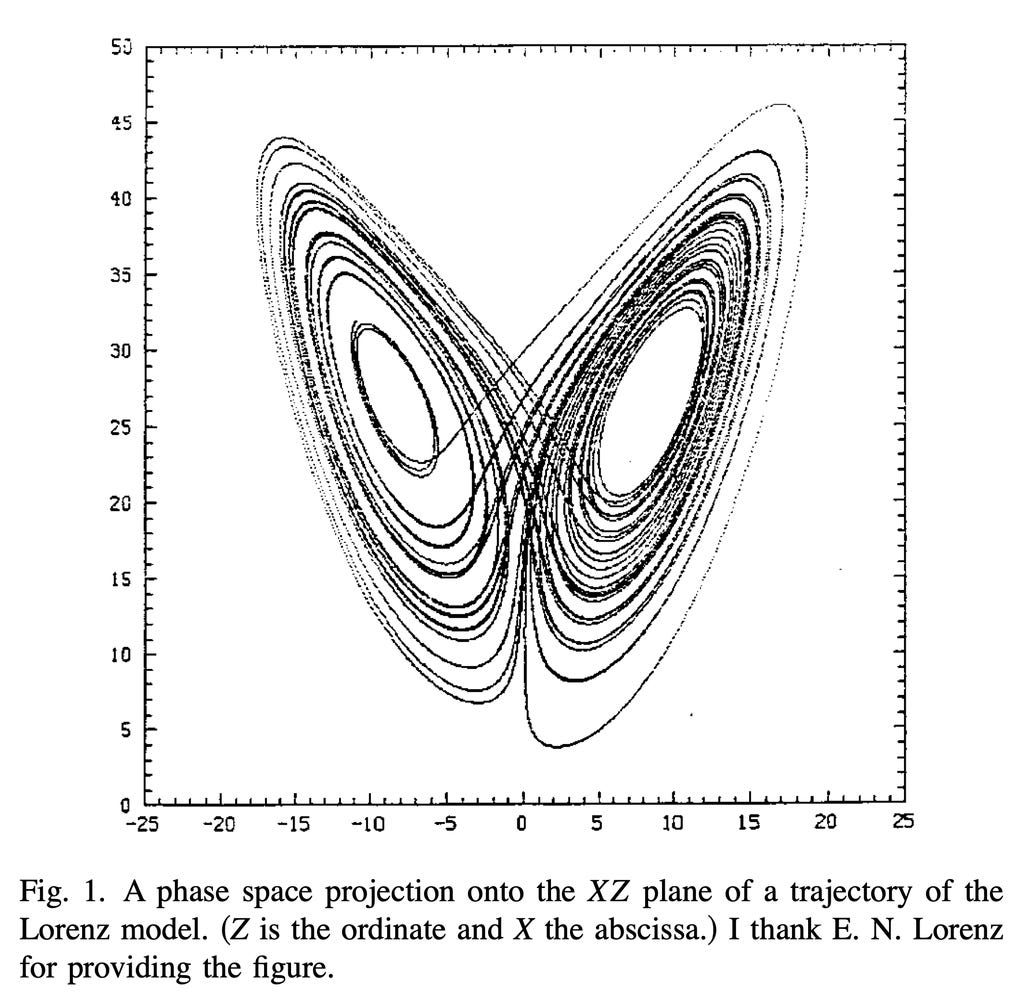
It traces to meteorologist Edward Lorenz, who in a 1972 talk asked whether the flap of a butterfly’s wings in Brazil could set off a tornado in Texas [Britannica, Lorenz, Brief history]. Lorenz was describing something specific: deterministic systems with sensitive dependence on initial conditions, where tiny differences in starting values compound into wildly different outcomes over time [The Conversation].
Social movements are not weather systems, and mapping chaos theory onto them directly is a stretch a strict physicist would object to. The more precise fit, and the one worth actually holding in mind as we walk through what happened, comes from sociology: Mark Granovetter’s threshold model of collective behavior [Model]. Granovetter’s argument was that people in any population carry different thresholds for joining a collective act. Some will act with almost no provocation; others need to see a crowd form first. When enough low-threshold individuals move, they lower the bar for the next group, who lower it further for the group after that, until a small initial nudge cascades into mass participation. The size of the outcome is not proportional to the size of the trigger. It is proportional to how many people were already standing close to their own threshold before anyone moved at all.
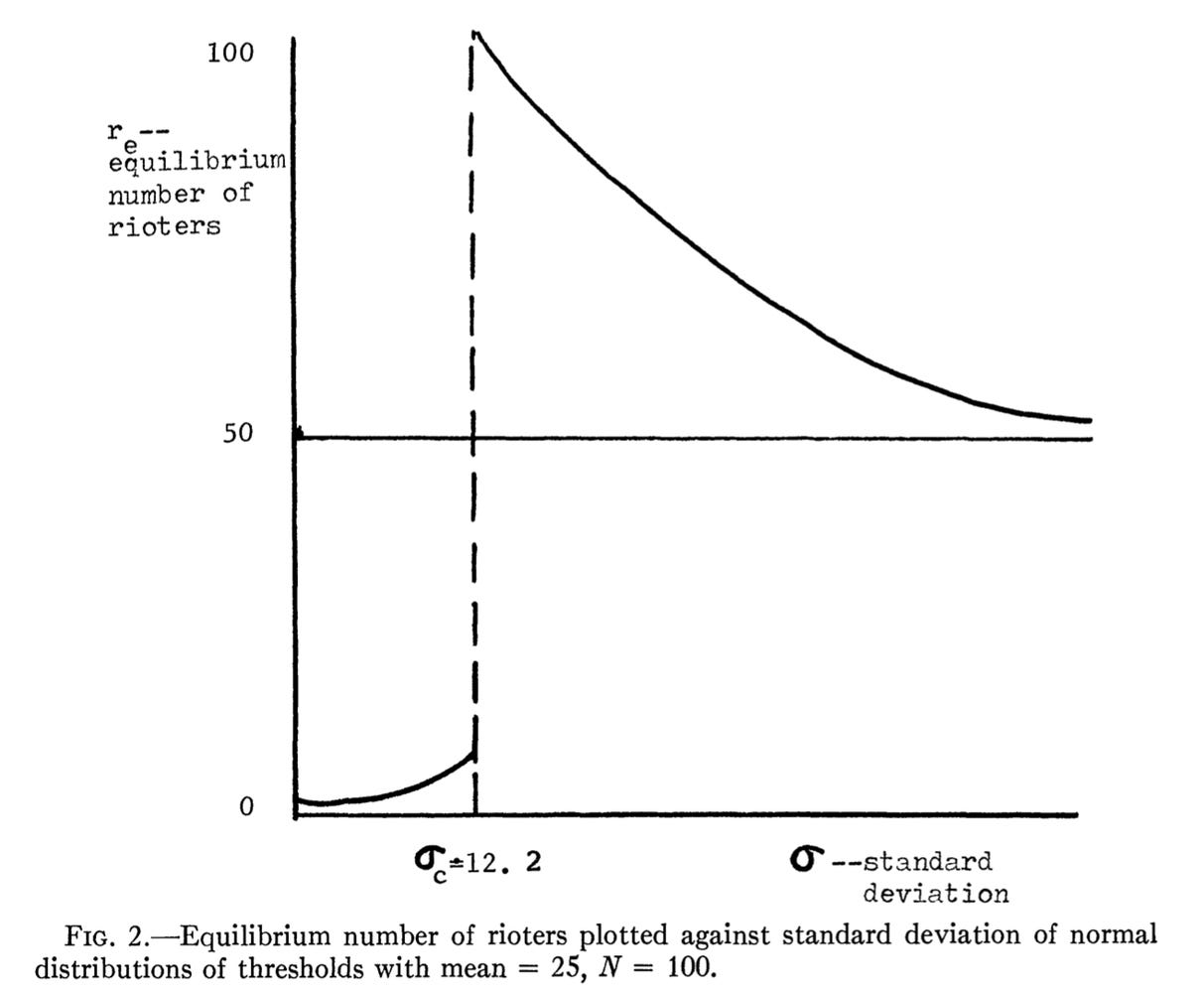
Let us keep this in mind as a lens and explore the sequence.
The ground was already unstable, before the remark
A trigger only cascades if the system is already primed. This one was.
Weeks before the Chief Justice spoke, India’s medical entrance exam had already broken trust with millions of families. NEET-UG 2026 was held on 3 May for more than 2.27 million aspiring doctors and dentists. On 12 May, the National Testing Agency cancelled the exam after investigators found that a “guess paper” circulating before the test overlapped heavily with the actual questions [Wikipedia, SCC Online legal analysis]. A retest was ordered for 21 June.
At almost the same time, the Central Board of Secondary Education was rolling out a new On-Screen Marking system for Class 12 evaluations, replacing physical answer-sheet grading with a digital process. The rollout was hit by blurry scans, technical glitches and marking disputes, leaving thousands of students without clarity on their results for weeks [Wikipedia, Fair Observer]. Union Education Minister Dharmendra Pradhan later said he accepted responsibility for the technical failures and announced plans to move NEET to a computer-based format from 2027 [NEET 2027].
This is the “initial conditions” part of the story. By mid-May, millions of families already had a live, specific grievance against the exam system. In Granovetter’s terms: a large population was already standing close to its threshold. It did not need a reason to be angry. It needed a reason to move.
The remark supplies the direction, not the anger
This is where the 15 May comment actually did its work. Not by creating outrage from nothing, but by giving an already-primed population a symbol, a name and a target. Fifteen days after Lorenz’s flap, the equivalent of a tornado touched down at Jantar Mantar.
CJP started as satire. It did not stay there. On 6 June, the party issued a seven-day ultimatum demanding Pradhan’s resignation and began daily demonstrations at Delhi’s Jantar Mantar, joined by established student bodies including the Students Federation of India and the All India Students Association [Wikipedia, ThePrint]. Protesters showed up banging plates and spoons, borrowing a gesture from earlier civic movements, to demand accountability from the exam authorities.
Then came a fact that hardened the mood in a way satire alone never could. By mid-June, national outlets including Outlook India had documented more than a dozen student suicides in the weeks following the exam cancellation, with families and police attributing several of these deaths to acute stress over the scandal [Outlook India]. This is a sensitive fact and deserves to be stated plainly rather than used for effect: protesters at Jantar Mantar cited these losses directly as a reason they stayed on the street [Al Jazeera]. In threshold terms, each new grievance lowered the bar for the next group of people to join.
The cascade compounds
Cascades need a visible act to keep pulling in the next group whose threshold is a little higher than the last.
On 28 June, Ladakhi engineer, educator and long-time activist Sonam Wangchuk arrived at Jantar Mantar and began an indefinite hunger strike [Wikipedia; Deccan Herald]. His fast visibly changed the shape of the protest. Crowds grew larger and more diverse, drawing in senior citizens and civil society groups who had not previously engaged with student politics. This is the threshold cascade made visible: people who would never have joined a student protest joined a vigil for a man risking his life.
By mid-July, Wangchuk had lost over nine kilograms and entered his third week without food, prompting opposition leaders to publicly urge him to stop [Al Jazeera]. On 18 July, Delhi Police removed him from the protest site and took him to hospital, a move that drew further national attention rather than deflating the movement.
The cascade reaches Parliament
Two days later, on 20 July, thousands of protesters marched toward Parliament under the banner “Chalo Sansad” (”March to Parliament”). Al Jazeera described it as one of the rare large-scale street challenges to have emerged during Prime Minister Narendra Modi’s twelve-year tenure. CJP spokespersons met with Union Minister J.P. Nadda the same day to discuss next steps [ThePrint].
Commenting on the scale of the turnout, political scientist and psephologist Yogendra Yadav described the mobilization of Indian youth around education and employment as a marker that politics “has to change in favour of the youth”, his own framing, offered as one observer’s read on the moment, not a settled verdict [Yogendra Yadav]. Whether the government moves on the protesters’ central demand, the Education Minister’s resignation, remains unresolved as of this writing.
What actually flapped, and what actually roared
Put the whole sequence next to Granovetter’s model and the mechanism becomes legible. The trigger, the Chief Justice’s remark, was small and almost incidental. The system it landed on was not: a cancelled national exam, a broken digital marking process, and a wave of student deaths that had already turned an abstract grievance into a personal one for millions of families. Each subsequent event, the ultimatum, the suicides entering public discourse, Wangchuk’s fast, his hospitalization, did the same thing in miniature: it lowered the threshold for the next group of people who were watching from the sidelines.
None of this required a single conspiracy or a single villain. It required a population already close to its breaking point, and a sequence of visible acts, each one making the next act of joining feel a little less risky and a little more legitimate.
Where this leaves both sides
As of this writing, neither side has moved. The government has not accepted the protesters’ central demand. The protesters, having built a movement on a Chief Justice’s insult and staked a public figure’s health on it, cannot quietly disperse without the movement collapsing on contact with its own name.
This is not quite a Prisoner’s Dilemma, the model most people reach for instinctively. What is playing out at Jantar Mantar is closer to a war of attrition, a model from evolutionary game theory: two parties locked in an ongoing, costly standoff, where conceding first means losing everything already staked, and the only way to “win” is to outlast the other side [War of attrition, Evolutionary game theory].
Wangchuk’s hunger strike is not just a protest tactic inside this story. It is close to a literal enactment of the model. Each day without food is a unit of cost he is visibly willing to absorb, a public signal that his threshold for conceding is higher than the government’s threshold for responding. The government, in turn, faces its own cost for backing down: a resignation under street pressure sets a precedent for every future protest against the administration. Both sides are now spending resources, political capital on one side, physical health on the other, not to win the original argument about exam reform, but to avoid being the one who concedes first.
This is a trap attrition games create. The cost already sunk becomes the reason to keep paying it. It rarely ends because one side out-argues the other. It ends when one side’s cost curve becomes unbearable before the other’s does, or when a third party changes the payoff for both, a negotiated exit, a court order, a health emergency, something that lets one side stop paying without calling it a loss.
The takeaway
Whether you run a company, a classroom or a policy team, the visible trigger of a crisis is almost never its actual cause. It is the last domino, not the first. The harder and more useful work, if you want to prevent the next one, is measuring how many dominoes are already leaning before anyone touches the first one.
What is the smallest trigger you have seen escalate into something far bigger than it should have, and once it did, what actually let either side step back without calling it a loss?
This piece references student suicides that have been publicly and extensively reported as part of this unfolding story. If this topic affects you personally, please reach out to a trusted person or a mental health professional.